Home · References
// REFERENCES
See for yourself.
Twelve example websites to click through, plus my own product ShopSync — all developed entirely in-house. Demos open in a new tab (they are in German).
Each of these demos also has background and context — on my industry pages.
The story behind ShopSync
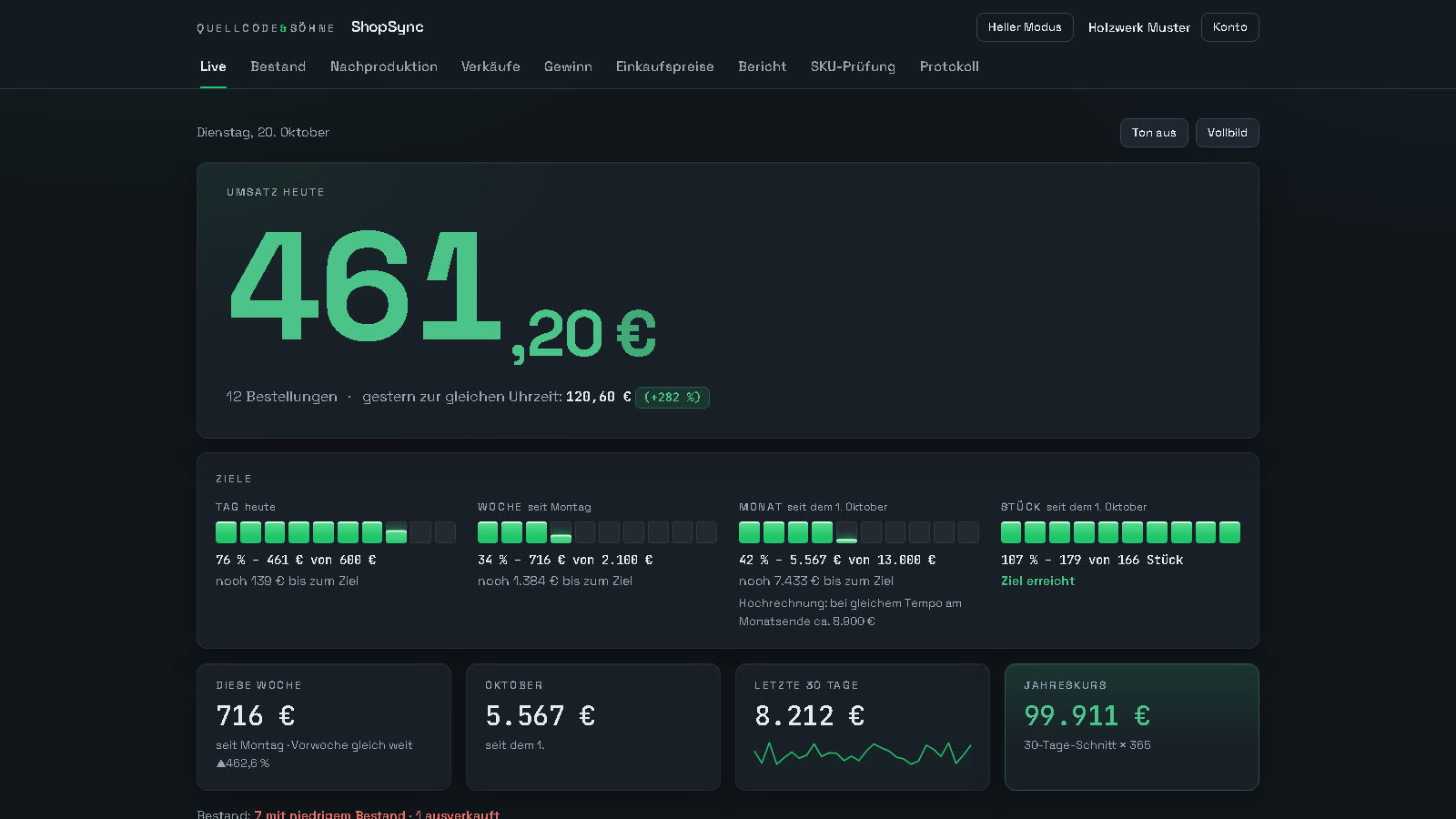
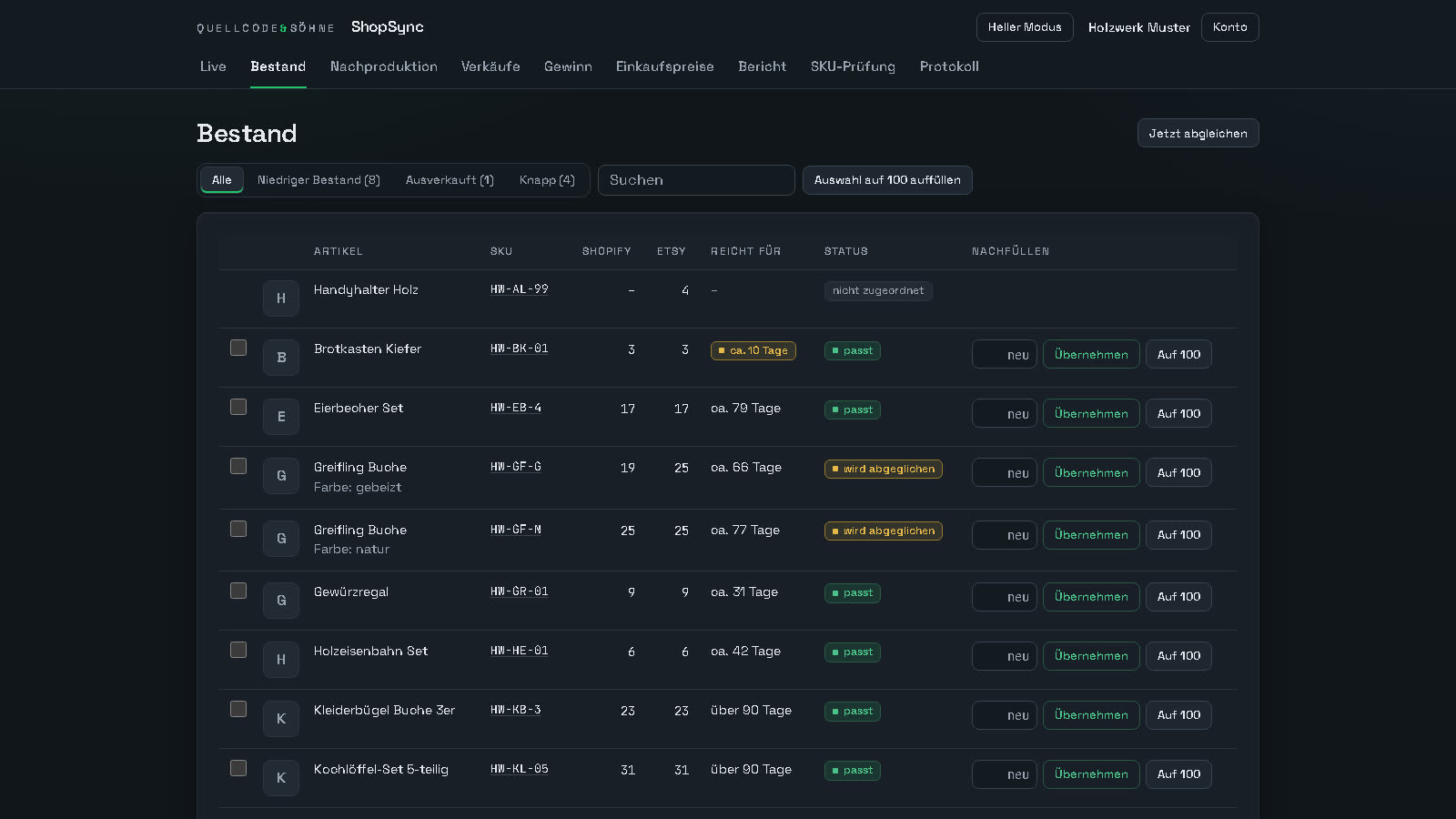
ShopSync is my own product — not client work, and I say so deliberately. The sync rules behind it have been running since September 2026 in the day-to-day business of an online merchant selling on Shopify and Etsy: every Etsy sale is deducted in the shop automatically. ShopSync itself has been working with a real merchant's data since October — first in read-only mode, so every sale can be compared with the existing sync. Only the names and figures in the screenshots above are sample data, because real merchants' figures belong to the merchants. ShopSync was built to the same standards I commit to for my clients: servers in Germany, no buyer data, more than 1,200 automated tests and complete documentation.
Case study: ShopSync
Starting point. Anyone selling the same items in their own online shop and on Etsy maintains stock twice. When an item sells on Etsy, it has to be deducted in the shop as well — and vice versa. Forget it, and you sell goods you no longer have. On top of that comes the question of what is really left after Etsy fees, payment fees and purchase costs.
Solution. ShopSync connects the shop and Etsy through their interfaces and matches items by SKU. An Etsy sale is deducted in the shop, and the Etsy quantities follow the shop's stock. Every merchant starts in read-only mode: ShopSync first only shows what it would do and writes nothing until the merchant switches it on. Sales history, fees and profit per item, the merchant's own targets and a daily report come on top.
Today. ShopSync runs around the clock on my server and syncs every minute; a merchant selling on Shopify and Etsy is testing it with real data. The interface is in German. A WooCommerce connection is being planned — merchants can join the waiting list (in German). The same work of getting two systems to talk to each other properly is what I do for your software: System integration.